

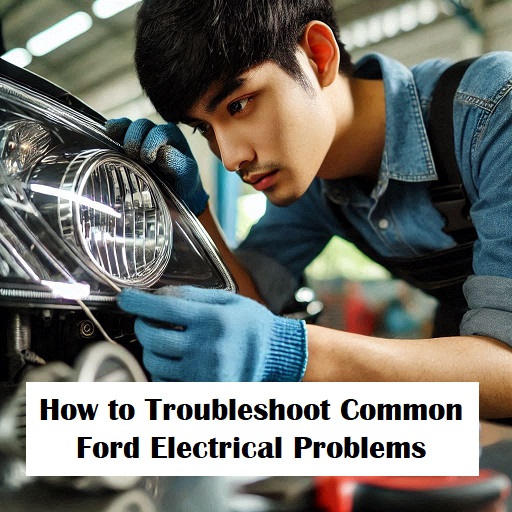
Electrical problems in your Ford can be frustrating, but with the right approach, many issues can be diagnosed and resolved without needing a trip to the mechanic. Whether you’re dealing with a dead battery, faulty lights, or issues with your vehicle’s electronic systems, this guide will walk you through the process of troubleshooting common Ford electrical problems.
Dead Battery or Battery Drain
A dead battery is one of the most common electrical problems in any vehicle, including Fords. If your car won’t start or if the battery dies frequently, here’s how to troubleshoot:
- Check the Battery Voltage: Use a multimeter to check the battery voltage. A fully charged battery should read around 12.6 volts with the engine off. If it reads below 12 volts, the battery may be discharged or faulty.
- Inspect the Battery Terminals: Corroded or loose battery terminals can prevent your car from starting. Check for white or blue corrosion on the terminals and clean them with a mixture of baking soda and water if necessary. Ensure the connections are tight.
- Test the Alternator: If your battery keeps dying, the alternator might not be charging it properly. With the engine running, check the voltage across the battery terminals. It should read between 13.7 and 14.7 volts. If it’s lower, the alternator may need to be replaced.
- Look for Parasitic Draw: A parasitic draw occurs when something in the vehicle is draining the battery even when the car is off. Use a multimeter to check for current draw. If it’s above 50 milliamps, start pulling fuses one at a time to identify the circuit causing the drain.
Blown Fuses
Fuses protect your vehicle’s electrical circuits from overloads. If something electrical in your Ford stops working, a blown fuse could be the culprit.
- Locate the Fuse Box: Your Ford’s fuse box is usually found under the dashboard on the driver’s side or in the engine bay. Check your owner’s manual for the exact location.
- Identify the Faulty Circuit: Consult the fuse box diagram to identify which fuse corresponds to the malfunctioning component, such as the radio, headlights, or power windows.
- Check the Fuse: Use a fuse puller or a pair of needle-nose pliers to remove the fuse. Hold it up to the light and inspect the metal wire inside. If the wire is broken, the fuse is blown and needs to be replaced with one of the same amperage.
- Investigate the Cause: If a fuse blows repeatedly, it indicates a problem with the circuit, such as a short. This will require further investigation, possibly with the help of a professional mechanic.
Malfunctioning Lights

Whether it’s a headlight, brake light, or interior light, malfunctioning lights are another common electrical issue in Ford vehicles. Here’s how to troubleshoot:
- Check the Bulb: Start by checking the bulb itself. If it’s burnt out, replace it with a new one of the same type. Be sure to handle halogen bulbs with gloves or a clean cloth, as oil from your skin can shorten their lifespan.
- Inspect the Fuse: If the bulb is fine but the light isn’t working, check the corresponding fuse. Replace it if necessary.
- Test the Switch: If multiple lights are malfunctioning, the issue could be with the light switch. Use a multimeter to test the switch for continuity. If it’s faulty, replace the switch.
- Check the Wiring: Damaged or corroded wiring can also cause lights to malfunction. Inspect the wiring leading to the affected light for any visible damage, and repair or replace it if needed.
Faulty Power Windows
Power windows that won’t go up or down can be another annoying electrical issue. Here’s how to troubleshoot power window problems:
- Check the Window Switch: The first step is to check the window switch. Use a multimeter to test for power at the switch. If the switch isn’t getting power or isn’t sending power to the window motor, it may need to be replaced.
- Inspect the Window Motor: If the switch is functioning properly, the problem might be with the window motor. Listen for any noise when you press the switch. If you hear the motor running but the window doesn’t move, the issue could be with the regulator or the motor itself.
- Look at the Wiring: Wiring issues can also cause power windows to fail. Check for any damaged or frayed wires in the door panel. If the wires are damaged, they’ll need to be repaired or replaced.
- Test the Window Regulator: The window regulator is responsible for moving the window up and down. If the motor is working but the window isn’t moving, the regulator may be worn out and need replacement.
Dashboard Warning Lights
Dashboard warning lights can indicate a variety of electrical problems, from minor issues to serious malfunctions.
- Read the Error Codes: If a warning light comes on, use an OBD-II scanner to read the error codes stored in the vehicle’s computer. These codes will help identify the specific problem.
- Check the Sensors: Many dashboard lights are triggered by sensors, such as those monitoring the engine, transmission, or braking system. If a sensor is faulty, it may need to be replaced to resolve the issue.
- Inspect the Wiring: Sometimes, a loose or damaged wire can trigger a warning light. Inspect the wiring and connectors associated with the warning light for any issues.
Problems with Electronic Accessories
Issues with electronic accessories like the radio, navigation system, or infotainment screen are becoming more common as vehicles become more technologically advanced.
- Reset the System: Sometimes, simply resetting the electronic system can resolve glitches. Refer to your Ford’s manual for instructions on how to perform a system reset.
- Check the Software: Ensure that your vehicle’s software is up to date. Some issues can be resolved with a software update, which can usually be done at a Ford dealership.
- Inspect the Wiring and Connections: If resetting the system doesn’t help, check the wiring and connections to the affected accessory. Loose or corroded connections can cause intermittent problems.
- Consult a Professional: If the problem persists, it may be due to a deeper issue within the vehicle’s electrical system, requiring professional diagnostics and repair.
Keep Your Ford Running Smoothly
Electrical problems in your Ford can range from simple fixes, like replacing a fuse, to more complex issues that require professional attention. By following these troubleshooting steps, you can often identify and resolve common electrical problems, keeping your Ford running smoothly and reliably. If you encounter a problem that you’re not comfortable handling on your own, don’t hesitate to seek help from a certified mechanic or a Ford dealership.
Connect with us


- July 2026
- June 2026
- May 2026
- April 2026
- March 2026
- February 2026
- January 2026
- December 2025
- November 2025
- October 2025
- September 2025
- August 2025
- July 2025
- June 2025
- May 2025
- April 2025
- March 2025
- February 2025
- January 2025
- December 2024
- November 2024
- October 2024
- September 2024
- August 2024
- July 2024
- June 2024
- May 2024
- April 2024
Archives
- Accessories
- Air Conditioning
- Brakes
- Business Solutions
- Cleaning Tips
- Co-Pilot360
- Comparisons
- Connectivity
- Driving Safety
- Driving Tips
- EcoBoost Technology
- Electric Vehicles
- Environment
- Family Fun
- Financing
- Fleet Service
- Ford Performance
- Ford Pro
- Ford Racing
- Ford SUVs
- Ford Vehicles
- FordPass App
- Fuel Efficiency
- General Information
- Helpful Hints
- History
- Hybrid Vehicles
- Insurance
- Local Information
- Maintenance & Service
- New Drivers
- New Ford Trucks
- New Vehicles
- Parts & Parts Department
- Powerstroke Diesel Engines
- Pre-Owned Vehicles
- Radio
- Road Trips & Vacations
- Safety Tips
- Seasonal
- Service Tips
- Shopping
- SYNC System
- Technology
- The Future of Ford
- Tires
- Towing
- Uncategorized
- Vehicle Buying Process
- Vehicle Details
- Warranties