

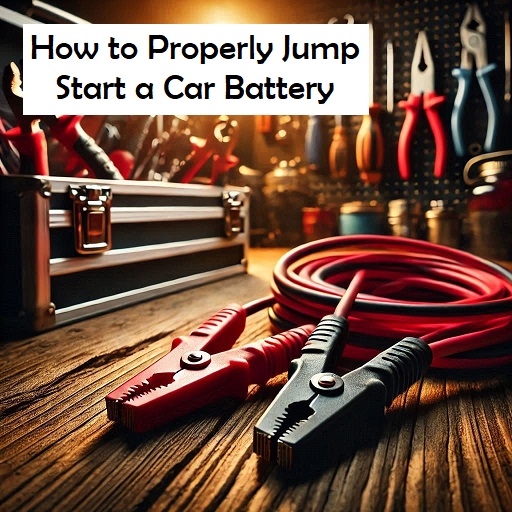
A dead car battery can be a frustrating experience, leaving you stranded and in need of assistance. However, knowing how to properly jump start a car battery can save you time and help you get back on the road quickly. In this blog, we’ll walk you through the steps to jump start a car safely and effectively, along with some essential safety tips to keep in mind.
What You’ll Need
- Jumper cables
- A functioning vehicle with a charged battery
- Protective eyewear (optional but recommended)
- Gloves (optional but recommended)
Steps to Jump Start a Car Battery
1. Prepare the Vehicles
- Position the Cars: Park the functioning vehicle (the “donor” car) close to the dead car (the “recipient” car”), ensuring that the batteries are within reach of the jumper cables. Turn off both vehicles and remove the keys from the ignition.
- Check the Batteries: Make sure both batteries are in good condition and compatible. Check for any visible damage, leaks, or corrosion. If you see any signs of damage, do not attempt to jump start the battery.
2. Connect the Jumper Cables
Properly connecting the jumper cables is crucial to avoid electrical shorts or sparks.
- Red Cable (Positive):
- Attach one end of the red jumper cable to the positive (+) terminal of the dead battery.
- Connect the other end of the red jumper cable to the positive (+) terminal of the charged battery.
- Black Cable (Negative):
- Attach one end of the black jumper cable to the negative (-) terminal of the charged battery.
- Connect the other end of the black jumper cable to an unpainted metal surface or a grounding point on the dead car. This could be a bolt on the engine block or the car frame, away from the battery. This step helps prevent sparks near the battery.
3. Start the Donor Vehicle
- Start the engine of the donor vehicle and let it run for a few minutes. This allows the charged battery to send power to the dead battery.
4. Start the Recipient Vehicle
- After a few minutes, try to start the engine of the recipient vehicle. If it doesn’t start immediately, wait a few more minutes and try again. Avoid cranking the engine for too long, as this can drain the donor battery.
5. Remove the Jumper Cables
Once the recipient vehicle starts, you can safely remove the jumper cables in the reverse order that you connected them:
- Remove the black cable from the grounding point on the recipient vehicle.
- Remove the black cable from the negative terminal of the donor vehicle.
- Remove the red cable from the positive terminal of the donor vehicle.
- Remove the red cable from the positive terminal of the recipient vehicle.
Be careful not to let the cable ends touch each other or any metal surfaces while removing them.
6. Let the Recipient Vehicle Run
After the jump start, let the recipient vehicle run for at least 15-30 minutes to allow the alternator to recharge the battery. If the vehicle doesn’t start after a few attempts, the battery may be too far gone or there may be another issue.
Safety Tips
- Read the Owner’s Manual: Before attempting a jump start, consult your vehicle’s owner manual for specific instructions related to your car’s make and model.
- Avoid Contact: Keep the jumper cable clamps from touching each other and avoid contact with any metal surfaces during the process.
- Wear Protective Gear: If possible, wear gloves and safety goggles to protect yourself from battery acid or any accidental sparks.
- Be Cautious of Battery Condition: If the battery is leaking or has a bulging case, do not attempt to jump start it. Instead, replace the battery.
- Seek Professional Help if Needed: If you’re unsure about jump starting a battery or if the vehicle won’t start after multiple attempts, it may be best to call for professional assistance.
A Straightforward Process
Jump starting a car battery can be a straightforward process if done correctly. By following these steps and safety precautions, you can safely get your vehicle back on the road in no time. Remember, regular battery maintenance and inspections can help prevent dead batteries and keep your vehicle running smoothly. Stay prepared and keep jumper cables in your trunk for emergencies, so you’re always ready to tackle a dead battery situation!
Connect with us


- July 2026
- June 2026
- May 2026
- April 2026
- March 2026
- February 2026
- January 2026
- December 2025
- November 2025
- October 2025
- September 2025
- August 2025
- July 2025
- June 2025
- May 2025
- April 2025
- March 2025
- February 2025
- January 2025
- December 2024
- November 2024
- October 2024
- September 2024
- August 2024
- July 2024
- June 2024
- May 2024
- April 2024
Archives
- Accessories
- Air Conditioning
- Brakes
- Business Solutions
- Cleaning Tips
- Co-Pilot360
- Comparisons
- Connectivity
- Driving Safety
- Driving Tips
- EcoBoost Technology
- Electric Vehicles
- Environment
- Family Fun
- Financing
- Fleet Service
- Ford Performance
- Ford Pro
- Ford Racing
- Ford SUVs
- Ford Vehicles
- FordPass App
- Fuel Efficiency
- General Information
- Helpful Hints
- History
- Hybrid Vehicles
- Insurance
- Local Information
- Maintenance & Service
- New Drivers
- New Ford Trucks
- New Vehicles
- Parts & Parts Department
- Powerstroke Diesel Engines
- Pre-Owned Vehicles
- Radio
- Road Trips & Vacations
- Safety Tips
- Seasonal
- Service Tips
- Shopping
- SYNC System
- Technology
- The Future of Ford
- Tires
- Towing
- Uncategorized
- Vehicle Buying Process
- Vehicle Details
- Warranties