

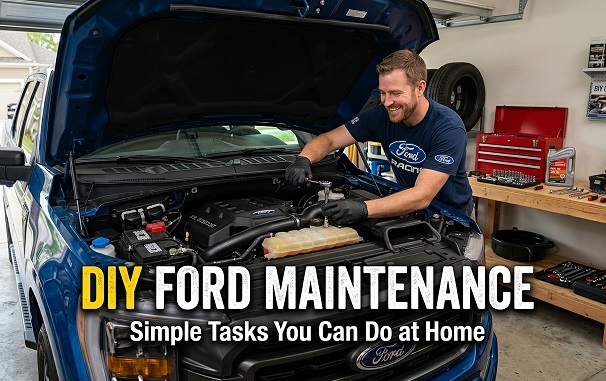
Taking care of your Ford doesn’t always mean heading to the dealership. In fact, many routine maintenance tasks can be done right at home with basic tools and a little time. Whether you’re looking to save money, learn more about your vehicle, or just enjoy the satisfaction of doing it yourself, DIY car care is a great option.
Here are some simple Ford maintenance tasks you can confidently do at home to keep your vehicle running smoothly.
Oil and Oil Filter Change
Changing your oil regularly is one of the most important ways to extend your engine’s life. Most Ford vehicles need an oil change every 5,000–7,500 miles, depending on driving conditions and the engine type.
What You’ll Need:
- The correct type and amount of oil (check your owner’s manual)
- A new oil filter
- Oil filter wrench
- Drain pan
- Socket wrench
Tip: Warm the engine slightly before draining the oil—it flows out more easily when it’s warm.
Air Filter Replacement
A clean air filter helps your engine breathe better and improves fuel efficiency. Replacing it is often as easy as unclipping a housing under the hood.
Steps:
- Locate the air filter box
- Remove the old filter
- Insert a new one (ensure it fits snugly)
Frequency: Every 15,000 to 30,000 miles, or sooner if you drive in dusty areas.
Windshield Wiper Replacement
Worn-out wipers can be a safety hazard. If they streak or squeak, it’s time for a change.
How-To:
- Lift the wiper arm away from the windshield
- Press the tab to release the old blade
- Slide the new blade into place until it clicks
Tip: Replace wipers at least once a year—sooner if visibility worsens.
Battery Terminal Cleaning
Corroded battery terminals can cause starting issues. Cleaning them is a quick fix.
What You’ll Need:
- Baking soda and water solution
- Wire brush
- Safety gloves and glasses
Steps:
- Disconnect the battery (negative terminal first)
- Clean corrosion with the brush and solution
- Rinse and dry, then reconnect the terminals
Tire Pressure Check and Inflation
Proper tire pressure improves handling, fuel economy, and tire life.
Steps:
- Use a tire pressure gauge to check PSI
- Inflate to the recommended pressure (found on the driver’s door frame)
- Check all four tires (and the spare!)
Tip: Check your tire pressure monthly, especially during temperature changes.
Replacing Cabin Air Filter
A clean cabin air filter ensures fresh air inside your vehicle and helps the HVAC system run efficiently.
Location: Usually behind the glove compartment.
Steps:
- Remove the glove box (if needed)
- Slide out the old filter
- Insert the new one in the correct airflow direction
Checking and Topping Off Fluids
Don’t wait for dashboard alerts—check fluid levels regularly, including:
- Coolant/antifreeze
- Brake fluid
- Power steering fluid
- Washer fluid
- Transmission fluid (for vehicles with a dipstick)
Use the correct fluid type listed in your Ford’s manual and avoid overfilling.
Replacing Headlights and Taillights
Dim or burnt-out bulbs can lead to safety issues or traffic tickets.
How-To:
- Access the bulb housing (often from inside the engine bay or trunk)
- Twist and remove the old bulb
- Insert the new bulb without touching the glass (wear gloves or use a cloth)
Final Thoughts
With a little confidence and the right tools, you can take on many basic Ford maintenance tasks at home. Not only will you save money, but you’ll also gain a better understanding of your vehicle’s condition and performance.
Connect with us


- July 2026
- June 2026
- May 2026
- April 2026
- March 2026
- February 2026
- January 2026
- December 2025
- November 2025
- October 2025
- September 2025
- August 2025
- July 2025
- June 2025
- May 2025
- April 2025
- March 2025
- February 2025
- January 2025
- December 2024
- November 2024
- October 2024
- September 2024
- August 2024
- July 2024
- June 2024
- May 2024
- April 2024
Archives
- Accessories
- Air Conditioning
- Brakes
- Business Solutions
- Cleaning Tips
- Co-Pilot360
- Comparisons
- Connectivity
- Driving Safety
- Driving Tips
- EcoBoost Technology
- Electric Vehicles
- Environment
- Family Fun
- Financing
- Fleet Service
- Ford Performance
- Ford Pro
- Ford Racing
- Ford SUVs
- Ford Vehicles
- FordPass App
- Fuel Efficiency
- General Information
- Helpful Hints
- History
- Hybrid Vehicles
- Insurance
- Local Information
- Maintenance & Service
- New Drivers
- New Ford Trucks
- New Vehicles
- Parts & Parts Department
- Powerstroke Diesel Engines
- Pre-Owned Vehicles
- Radio
- Road Trips & Vacations
- Safety Tips
- Seasonal
- Service Tips
- Shopping
- SYNC System
- Technology
- The Future of Ford
- Tires
- Towing
- Uncategorized
- Vehicle Buying Process
- Vehicle Details
- Warranties